Which roller track design suits your body and the massage you actually want?
S-track, L-track, or the hybrid SL-track: the shape of the rail the rollers ride on shapes everything from glute coverage to how deeply the chair can stretch you. Here is how to choose with confidence.
What the letters actually describe
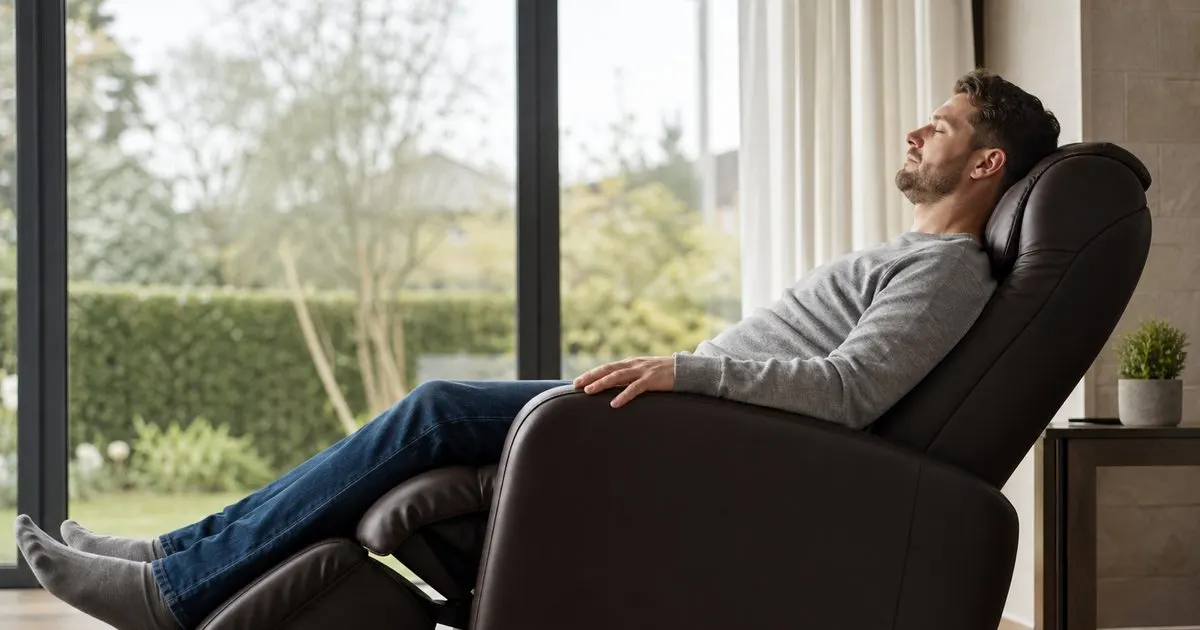
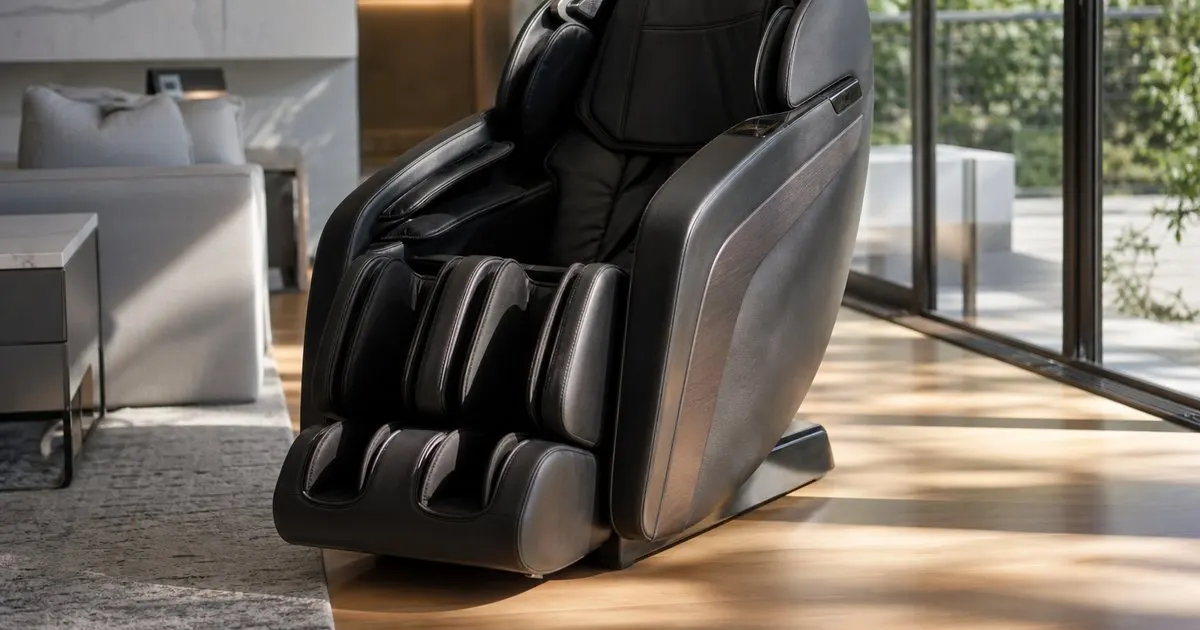
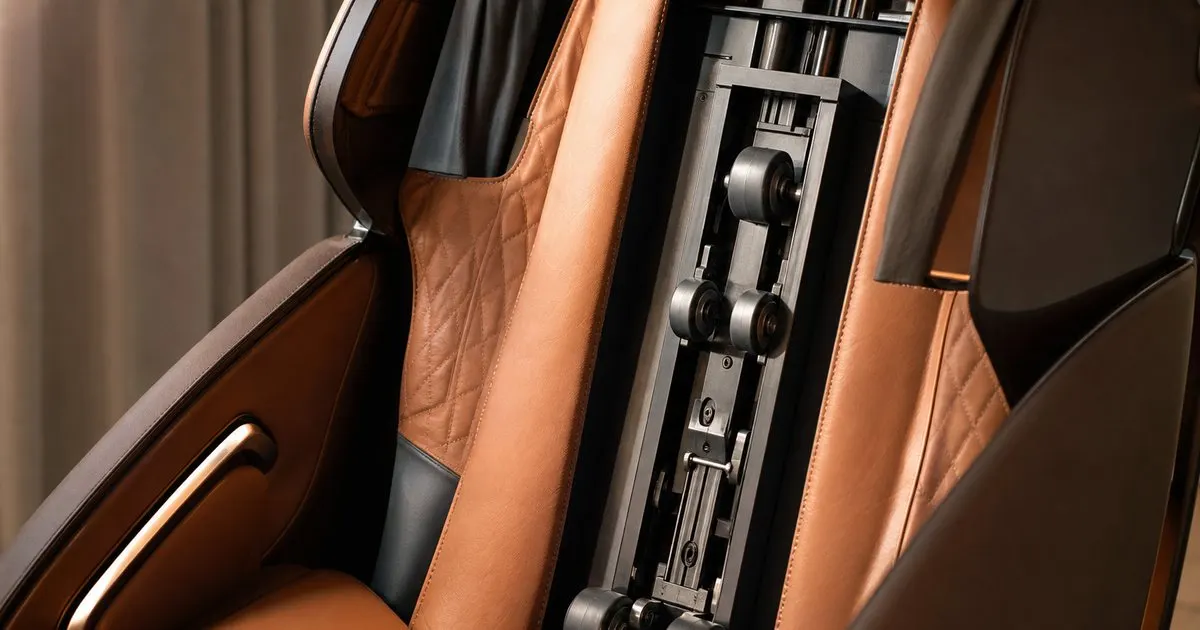
The track is the rail the roller carriage travels along inside the backrest, and its shape decides what the rollers can touch. An S-track is a curved rail that follows the natural S-shape of the spine from the neck to the lower back, keeping the rollers in contact through the inward lumbar curve rather than losing them where the back arches. An L-track continues past the lower back and bends under the seat, so the rollers travel from the neck down through the glutes and toward the upper hamstrings. An SL-track combines both ideas: curved along the spine, then extended under the seat. Most luxury chairs sold today use some form of SL design.
The consequence of a longer rail is coverage, and the traditional cost of that coverage is in the structure. Because the back and seat of an L or SL chair form one continuous unit around the rail, they cannot separate the way a two-piece S-track chair can, which historically limited the recline angle and the depth of the traction stretch. Newer designs have narrowed that gap considerably, and many SL chairs now recline to a full zero gravity position, but the difference has not vanished entirely, which is why the S-track survives in a few premium models built specifically around stretching. Related: What separates a genuine luxury massage chair from a mass market recliner?
Keep reading: What separates a genuine luxury massage chair from a mass market recliner?, How does full body 4D roller technology change the feel of a massage?, Does a massage chair need to fit your exact height and build?. See how Reclivault helps you an expert guide to the finest full-body massage chairs.
Who is best served by each design
If your tension gathers in the glutes, the piriformis, or the top of the hamstrings, which is common among desk workers, drivers, cyclists, and runners, an L or SL track puts the rollers exactly where an S-track stops. Feeling a roller work through the glute while the chair is reclined is, for many people, the moment a massage chair becomes indispensable. Taller users should look closely at where the rail begins as well as where it ends, since a long track that starts too low still misses the shoulders and neck no matter how far it travels beneath the seat. Related: How does full body 4D roller technology change the feel of a massage?
Stretch enthusiasts have a real reason to consider an S-track chair with a separate back and seat. In that design the airbags hold the hips and feet while the backrest reclines, and the separation of the two sections lets the chair apply a deeper traction along the spine. If that sensation matters more to you than glute coverage, an S-track is a legitimate and deliberate choice rather than an outdated one. For lower back complaints specifically, both designs work, and the quality of the lumbar curve contour and the depth adjustment of the rollers matter far more than the letter on the specification sheet.
Specification details that matter more than the letter
Track length as a bare number is only useful with context. Ask where the rail starts and whether the rollers genuinely reach the base of the skull for a person of your torso length, then ask where it ends. The curvature matters as well. A rail that is too flat lets the rollers float away from the lumbar curve; one that is too aggressive digs. Automatic body scanning is meant to calibrate this, but a manual shoulder height adjustment is a useful backup when a scan lands in the wrong place, and it is worth confirming the chair has one. Related: Does a massage chair need to fit your exact height and build?
Look for whether the rollers can still work the glutes when the chair is fully reclined, because some designs restrict roller travel in the zero gravity position, which quietly takes away the main reason to buy an L-track. Confirm the recline angle in that position. Roller width settings, usually narrow, medium, and wide, interact with track shape because a wide setting on a curved rail reaches the muscles beside the spine rather than the spine itself. And 3D or 4D depth control matters more on an S-track, where the rollers cannot rely on gravity pressing you into them at the seat. Related: What should you know about zero gravity positioning before buying a massage chair?
How to test the difference and decide
In the showroom, select a manual mode that uses the full track range and feel whether the rollers reach the top of your neck, then wait for them to travel beneath the seat. Recline fully and check whether that coverage persists. Ask the chair to stretch you. Sit through the transition where the rollers pass from the backrest into the seat and note whether it is smooth or produces a bump under the tailbone, which is a sign of a poorly shaped rail or a thin pad. Compare the same sequence on an S-track chair if the store has one, and notice which sensation you miss when you stand up.
Our view is that an SL-track is the sensible default for most buyers today, because it delivers both the lumbar contour and the coverage below it that most people are paying for. Choose an S-track only if the deepest possible traction stretch is your priority and glute work is not. In either case, do not let the track type override fit. A chair whose rollers land correctly on your shoulders and lumbar curve will always beat a longer rail that lands in the wrong place. We may earn a commission when you buy through our links, and that has no bearing on which rail we think suits you.
- An S-track follows the spine's curve and stops at the lower back; an L or SL track continues under the seat to the glutes and hamstrings.
- Glute and hamstring tension points toward an SL-track, while a preference for deep traction stretching can justify an S-track.
- Where the rail starts, its curvature, and whether rollers keep working when reclined matter more than the printed length.
- Fit at the neck and lumbar curve outranks track type in every decision.

Julien Jimenez
Julien Jimenez is an independent software builder based in Paris. He designs, ships, and operates focused SaaS products for small businesses and independent professionals. Read the full author page.
Full-Body Comfort, Considered Carefully
An expert guide to the finest full-body massage chairs. Reclivault is built to help you put this into practice.
See the top chairsMore from the Reclivault blog
Get the complete massage chairs guide
Our full buying guide, the price guide, and new research as we publish it. One email, no spam, unsubscribe any time.